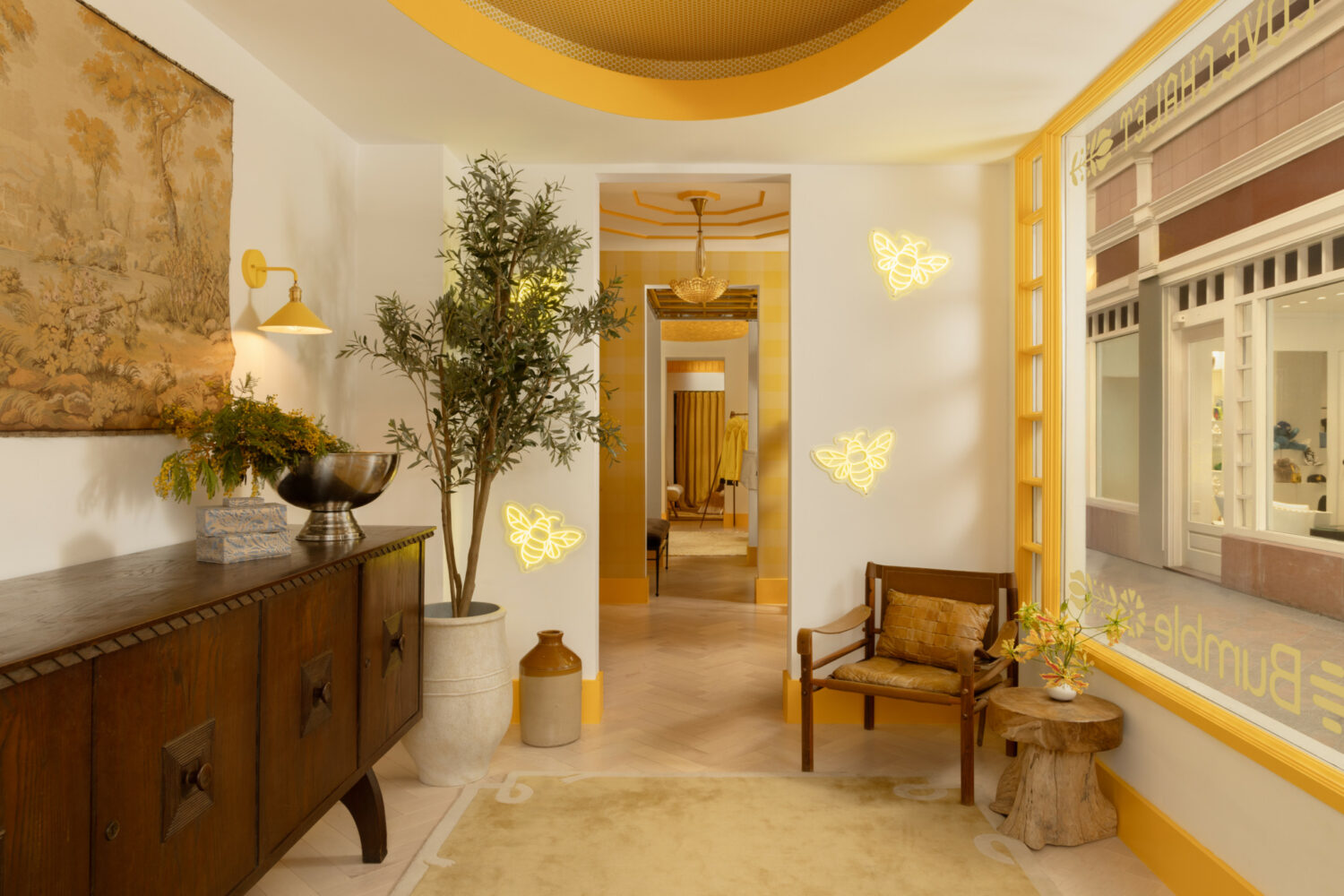
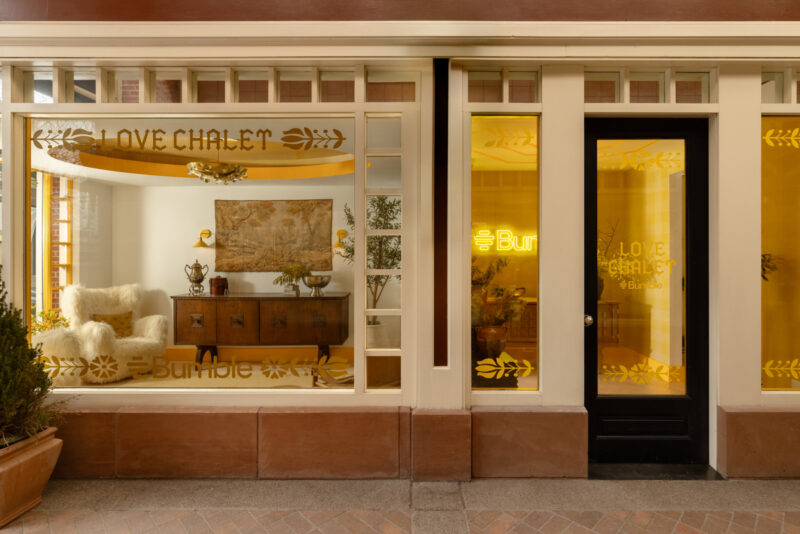
Branded environments often prioritize visibility over atmosphere. Every surface becomes an opportunity for a logo, while spaces are designed with social media in mind. For Bumble’s seasonal Love Chalet in Aspen, however, Studio Coco Greenblum took a different approach. The temporary hospitality space was designed less like an activation and more like an inviting mountain residence where conversation could unfold naturally.

Photography by Kylie Fitts
Commissioned by the dating app for a series of post-ski gatherings, collaborations, and events, Bumble’s Aspen installation came together in just three weeks—including design, procurement, and installation. Instead of allowing that compressed timeline to dictate the outcome, studio founder Coco Greenblum says it sharpened her studio’s priorities.
“There wasn’t time to overthink every decision,” she explains. “We focused our energy on creating a strong overall narrative through color, texture, and a few memorable moments.” The result, she says, is proof that decisiveness can sometimes strengthen a project’s point of view rather than diminish it.

Photography by Kylie Fitts
The challenge wasn’t simply translating Bumble’s recognizable visual digital identity into a real space. Aspen carries equally strong visual associations, from rustic chalets to après-ski culture. Instead of leaning into either aesthetic too literally, Studio Coco Greenblum searched for common ground.
“We wanted the space to feel unmistakably Bumble without feeling overly branded, while honoring Aspen’s warmth,” Greenblum says. “The goal was to create a hospitality experience that felt sophisticated and inviting with subtle nods to both worlds rather than a literal interpretation of either.”
Photography by Kylie Fitts
One of the clearest expressions of that strategy is Bumble’s signature yellow. Rather than applying it as graphic branding, the studio integrated it into the architecture itself, wrapping baseboards, trim, doorframes, ceiling details, and window surrounds.
“The space had a series of long, narrow rooms,” Greenblum explains. “Applying the color architecturally helped unify the areas and create a sense of rhythm. It became a wayfinding device of sorts but also added an unexpected playfulness that felt true to Bumble.”

Photography by Kylie Fitts
That architectural framework is softened through layers of vintage furnishings, Murano lighting, French and European antiques, Nordic Knots rugs, and textured materials that introduce permanence into a temporary installation. The bar, in particular, feels intentionally residential, combining 1970s casework, shearling seating, patterned wallpaper, and intimate lighting.
“It was less about creating a typical event space and more about capturing the warmth and comfort of being invited into someone’s beautifully collected mountain home,” Greenblum says.
The Love Chalet included spaces for hospitality, wellness, retail, beauty, and content creation, but the studio resisted treating each program as a separate activation. Instead, repeated architectural details and materials created continuity throughout the experience.

Photography by Kylie Fitts
“We approached the Love Chalet as if we were designing a home,” Greenblum explains. “Each area had its own personality, but they all spoke the same language… like discovering different rooms within a beautifully collected home rather than moving through a branded event.”
That same philosophy shaped the project’s more overtly experiential moments. Custom neon installations and a playful “dripping honey” motif in the photography room certainly lend themselves to social media, but Greenblum argues those elements only succeed when they’re rooted in the larger spatial narrative.

Photography by Kylie Fitts
“If a moment is memorable, beautifully executed, and contributes to the feeling of the space, it doesn’t have to sacrifice sophistication,” she says. “The goal is always to create experiences people genuinely connect with, not just backdrops for a photo.”
Just as importantly, the studio intentionally avoided many of Aspen’s familiar design tropes. “There were no antlers, traditional plaids, or overly literal references to chalet culture,” Greenblum says. “The goal was to evoke the feeling of Aspen rather than recreate a stereotype of it.”

Photography by Kylie Fitts
The project ultimately demonstrates that temporary environments can aspire to something more lasting. Rather than designing for photographs alone, Studio Coco Greenblum focused on how the space would make people feel.
“We wanted it to feel collected, not staged, so people remembered how it felt and not just how it photographed,” she says. Looking back, she believes the project showed that “branded environments can be imaginative without sacrificing warmth, authenticity, or good design.”
Editorial Transparency: This article was developed with the assistance of AI tools, which may have been used for research, outlining, editing, or copy refinement. Reporting, fact-checking, and editorial decisions were made by the Design Milk editorial team.
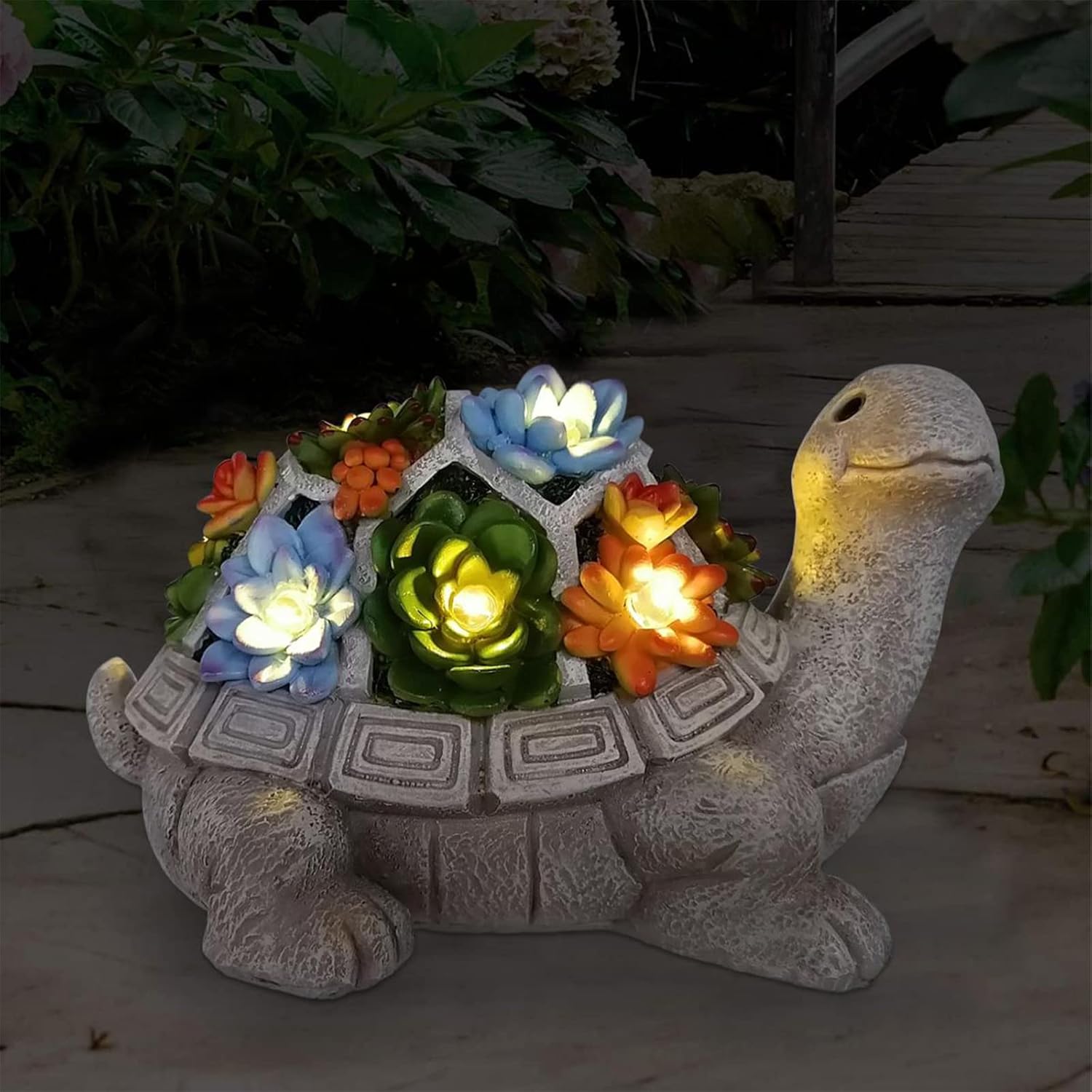
 FANTESTICRYAN Small Animal Statues Home Decor Modern Style Black Decorative Ornaments for Living Room, Bedroom, Office Desktop, Cabinets…BUY NOW